Today’s educator workshop at the deYoung included an interesting lesson idea that incorporates a basic lesson about color theory and branches into word associations that can be used to express color in writing.
The lesson began with creating a color wheel, using primary colors to mix secondary colors and learning about the proper order of the wheel to show the relationship of complimentary and analogous colors.
With color wheels complete, we broke into small groups to brainstorm word associations with each color on our wheels. The words included actual names of the shades of different colors, as well associations of objects that represent that color. For example, the color red yielded associations such as crimson, vermillion and scarlet, as well as sunburn, candy apple, and lipstick.
On a visit to the exhibit later in the morning, I zeroed in on a few paintings with focused observation, writing stream-of-consciousness notes on both physical observations as well as emotional and intellectual responses to viewing the works. Later, using the ideas from the morning lesson, I challenged myself to write a poem about one of my favorite paintings in the exhibit, “The Magpie” by Claude Monet.
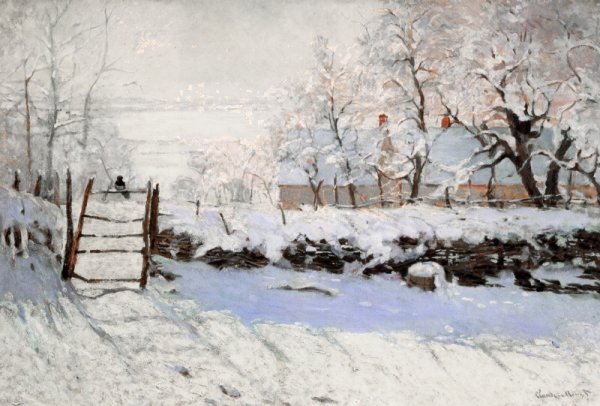
A thick, white blanket shrouds the spring that sleeps beneath
Sunlight on snow casts deep, icy shadows
An ivory path seamlessly meets the ephemeral light
Show me the colors of luminosity
Ice blue
Periwinkle
Alabaster
Pearl
An inky magpie perched atop the fence
Like the highest note on a musical staff
He chirps a delicate song
A fleeting moment
Then it’s gone


Beautiful poem Amy!
ReplyDeleteGreat imagery.
Love cyndy
Hi Amy,
ReplyDeleteMarcus & I have an interest in playing with color too! We would like to explore the emotional associations and personal relationships that we have with color through music. To support the color study, I'll be putting together some optical hands-on science activities that will help kids to see that all of the colors of the rainbow are contained within both white and black.